Mongolia Travel Costs at a Glance
- Mongolia currently has 1 indexed destination pages on this site.
- Average daily cost for backpacker travel is about $30, with an average score of 6.5/10.
- Top-rated city is Ulaanbaatar and the most affordable option is Ulaanbaatar.
- Average fixed internet speed is 50 Mbps and safety is 6.0/10 based on current dataset values.
Is Mongolia Expensive?
Is Mongolia expensive? It depends on how you travel, but it is neither the bargain nor the blowout that many assume. The site's figures for Ulaanbaatar, the only destination we publish, put backpackers at $30/day ($900/month), digital nomads at $60/day ($1800/month), and luxury travelers at $300/day ($9000/month). That range reflects a country where almost everything is either imported or transported vast distances: food, fuel, building materials, and even dairy products often travel hundreds of kilometers on rough roads.
Why those totals? Mongolia has no budget airline network flying into its capital, so the international flight alone eats a chunk of any budget. Once you arrive, Ulaanbaatar has a decent supply of guesthouses and mid-range hotels serving a summer-only tourist rush, but in winter demand collapses and prices drop for the few who come. The local currency, the tugrik, is weak, which helps anyone arriving with dollars or euros, but inflation on imports chips away at that advantage. The biggest cost driver is seasonality: from June through August, demand outstrips supply, and even a basic ger camp costs $30–$50 per night. In May or September, the same bed often costs half that. For a traveler used to Southeast Asia, Mongolia will feel expensive; for one coming from Western Europe, the daily totals will feel moderate.
How Much Does It Cost to Travel in Mongolia?
Because this site covers only Ulaanbaatar, the 'regional' story is really about how the capital compares to the countryside, and how your daily budget changes as you leave the pavement. Ulaanbaatar is both the cheapest and the most expensive destination we list — this is the widest gap possible, for a simple reason: this is the only destination we publish. The $30/day backpacker figure assumes dorm beds in the city, street food, public buses, and avoiding tourist ger camps. The $300/day luxury figure assumes a top-end hotel, private driver, fine dining, and domestic flights.
In practice, budget travelers should plan for $30–$45/day if they stay in Ulaanbaatar and use it as a base. That covers a hostel bed at $8–$12, two meals at $4–$6 each, and a bus ticket at $0.50 per ride, with a little left for a museum entry or a beer. Mid-range travelers should estimate $60–$100/day: a private guesthouse room at $30–$40, sit-down meals at $8–$12, taxis, and day tours to Gorkhi-Terelj National Park. If you venture into the countryside, costs rise because transport is per-vehicle, not per-person; a jeep hire with driver costs $60–$100 per day split between passengers, and a tourist ger camp charges $30–$60 per night with meals. Comfort-level travelers paying for domestic flights, English-speaking guides, and the better camps should expect $150–$300/day.
Best Time to Visit Mongolia
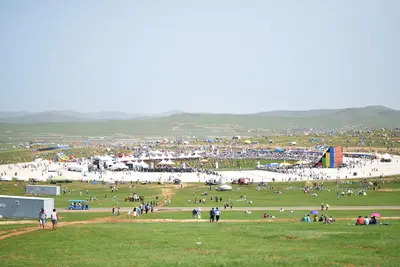
The travel season runs from late May to early September, and the price of everything tracks that window. Peak season is June through August, when the weather is warm, the National Naadam Festival takes place on July 11–13, and ger camps and hotels in Ulaanbaatar fill up. During Naadam, accommodation prices can double or triple, and hostel beds that cost $8 in May often sell for $15–$20 if you have not booked weeks ahead. July is also the rainiest month, so you get warm weather but muddy roads.
The value window is the shoulder months: late May to mid-June and September. The weather is still workable — daytime highs around 15–20°C (60–68°F) — and prices for flights and hotels drop by 20–30 percent. The highlight of late May is that the countryside is green and wildflowers are out before the summer crowds arrive. In September, the autumn colors begin, but the weather turns cold at night, often dropping to freezing. Winter, from November to March, is brutally cold with daytime highs often below -15°C (5°F), but hotel prices fall to half of peak rates. If you come then, you will see Ulaanbaatar's famous ice festival and the blue sky that gives the country its nickname, but you will also need serious cold-weather gear. For the best balance of price, weather, and minimal crowds, aim for the first two weeks of June or the last two weeks of September.
Getting Around Mongolia
With only one destination on this site, getting around means getting into Ulaanbaatar and then taking day trips or overnight trips from it. The international gateway is Chinggis Khaan International Airport (UBN), about 15 km southwest of downtown. A taxi from the airport to the city costs $10–$15 when you negotiate in advance; the official airport bus runs every hour and costs about $1.50.
Within the city, the bus system is genuinely cheap — a single ticket is about $0.50 — and a taxi across the city costs $3–$5. For out-of-town trips, the most practical option is a private vehicle with a driver, since an extensive bus network does not serve most tourist sites. A shared jeep to Terelj National Park, 55 km east of the city, costs $10–$15 per person if you join a group, or $60–$80 for a private car and driver for the day. To reach the famous attractions further afield, like Khuvsgul Lake or the Gobi Desert, you have two choices: a domestic flight or a multi-day overland drive. A one-way flight from Ulaanbaatar to Murun, the gateway to Khuvsgul Lake, costs $80–$120 if booked two weeks ahead; to Dalanzadgad, the Gobi gateway, it is $70–$100. Driving to either takes 12–20 hours on sometimes gravel roads, so most travelers fly. Trains are slow and cover few routes; the Trans-Mongolian line runs through Ulaanbaatar but isn't useful for reaching the tourist heartland.
Visas, Money and Entry Rules for Mongolia
Most foreign visitors from the US, UK, EU, and Australia do not need a visa for stays up to 30 days. That window covers a solid circuit of central Mongolia plus Ulaanbaatar. If you need longer, the immigration office in Ulaanbaatar can issue an extension for about $25, but it costs you a day of paperwork. Your passport must be valid six months beyond arrival.
Carry cash in the Mongolian tugrik (MNT) — market stalls, ger camps, and small restaurants rarely accept cards. Ulaanbaatar has a decent ATM network, but machines charge $5–$8 per withdrawal and some have $300 limits, so take out larger amounts. Change money at banks or licensed counters in the city, not at the airport, where rates are worse. ATMs sometimes run out of cash on weekends, so plan ahead.
Tipping is light: 10% at restaurants is appreciated, and $5–$10 per day for guides and drivers is standard. Israeli passport stamps can trigger questioning at Mongolian borders, though entry is not restricted as of 2026. Keep $200–$300 in US dollars for flights and hotel deposits, since many operators prefer cash.