Nigeria Travel Costs in 2026
Africa1 destination to explore. Daily costs average $40 with internet speeds around 20 Mbps and a safety rating of 5.0/10.
Nigeria Travel Costs at a Glance
- Nigeria currently has 1 indexed destination pages on this site.
- Average daily cost for backpacker travel is about $40, with an average score of 4.0/10.
- Top-rated city is Lagos and the most affordable option is Lagos.
- Average fixed internet speed is 20 Mbps and safety is 5.0/10 based on current dataset values.
Is Nigeria Expensive?
Nigeria is not the budget-travel bargain its exchange rate might suggest. The official average for a backpacker is $40 per day, a digital nomad should expect $70, and comfort runs $250 daily — numbers that look high for West Africa because so much of what you touch, from a hotel meal to a filtered water bottle, is imported. The naira has depreciated sharply in recent years, but rents and wages in Lagos are tied to dollars, and the oil-centric economy produces little locally that a traveler consumes. Add poor international flight connectivity and a heavy fuel-import bill, and you get prices that hover at mid-range even in cheap categories.
Infrastructure deficits also push costs up: frequent power cuts force hotels to run generators, and that fuel cost lands on your bill. The result is a country where a bed in a guesthouse in Lagos costs as much as a good hostel bed in Europe, while street food keeps the daily total within reach. For the traveler who moves like a local — taking danfos, eating suya, drinking sachet water — $40 a day is genuinely viable. Anyone with working habits or air-conditioning habits will quickly climb to $70, and $250 a day buys a slice of the international-hotel economy.
How Much Does It Cost to Travel in Nigeria?
On this site, Nigeria has exactly one destination: Lagos. That makes it both the cheapest and the most expensive place in the country at our listed $40-per-day backpacker rate. In practice, that number reflects a budget traveler sleeping in hostels and eating on the street; a mid-range traveler who wants a private bathroom and restaurant meals should plan on $70 to $120, while a comfort traveler in a hotel with sustainable power and real Wi-Fi will spend $120 to $250. Those ranges track our published figures: $40, $70, and $250 are realistic anchors, not national averages.
The gap inside Lagos is huge. In mainland neighborhoods like Yaba or Surulere, a guesthouse bed can be $8 and a plate of jollof rice $2. On Victoria Island or in Ikoyi, the same plate in a mall food court costs $8, and a mid-range hotel room starts at $60. Outside Lagos, in cities like Ibadan or Calabar, day-to-day costs tend to fall — though our guide does not cover them — so treat the Lagos numbers as the top of the Nigerian scale.
Best Time to Visit Nigeria
The best value window runs March and April, when the dry season is fading but the rains haven't yet fully arrived. From May through October you get heavy downpours, but also the lowest hotel rates of the year; July and September are the wettest months and land travel can become miserable. If you want guaranteed sunshine for the beach, November to February is the classic dry season, with December and January the single most expensive weeks to be in Lagos — every diaspora visitor and returning family drives hotel rates 30-50% above the average, and domestic flights sell out.
The harmattan wind brings dry, dusty air from the Sahara between December and February; it can make skies hazy and temperatures feel cooler in the mornings. March and October are genuinely pleasant and underrated — you'll share the city with fewer foreigners and have your pick of rooms. Avoid the April/May transition if you don't like humidity; the rains are erratic but heavy. For cost, aim for March or October, and if you can be flexible, mid-week stays are cheaper than weekend traffic.
Getting Around Nigeria
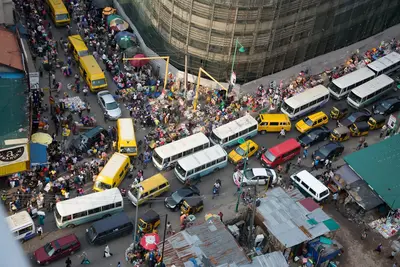
Since this guide covers only Lagos, the main transport challenge is getting from the airport to your lodging and then moving around a city of 15 million people. A ride-hailing taxi (Uber or Bolt) from Murtala Muhammed International to Victoria Island costs $15 to $25 and takes 45 minutes at 3 a.m., or two hours in rush hour. The city's yellow danfo minibuses cost about $0.20 a ride, and the new BRT bus network is slightly more but still under $1; neither is comfortable with luggage. For shorter hops, motorbike taxis (okada) are banned in many areas and unsafe, so use your judgment.
To go beyond Lagos, you would be flying: domestic fares to Abuja run $80 to $150 one-way depending on how far ahead you book, and to Port Harcourt $100 to $160. A ride to the airport at dawn adds $10 to $15. There is no useful domestic train service from Lagos as of 2026, and interstate bus journeys are cheap ($10 to $30 for a few hundred kilometers) but notoriously slow and unreliable. If you have only a week, plan to stay in Lagos rather than hopping cities; the internal flights will eat your budget.
Visas, Money and Entry Rules for Nigeria
Most travelers — including US, UK, and EU passport holders — need a Nigerian visa in advance. The e-visa is the straightforward route via the Nigerian Immigration Service; fees range from about $20 for a short-stay to $160 for a single-entry business visa, and you usually get a 30-day stay. Have a yellow fever certificate ready; you will be asked to show it before landing. The currency is the Nigerian naira (NGN); as of August 2026, $1 buys around 1,450 naira, but the exchange rate moves unpredictably, so check the day you arrive.
Cash is king outside high-end hotels. Bring US dollars in crisp $100 bills to exchange at authorized forex bureaus, and be prepared for ATM withdrawals to fail or eat you with fees. Visa and Mastercard work at big hotels and some supermarkets, but don't count on contactless. Tipping is not a big deal: round up the fare, or leave 5-10% in a good restaurant if there is no service charge. The trap travelers fall into is accepting ride-hailing fares in dollars or paying a tour guide with a card surcharge; negotiate and always settle in naira after confirming the rate.